
The complexity of integrating traditional mainframes with distributed computing environments continues to challenge IT professionals. To help orient you in this changing landscape, we have compiled a guide to robust, comprehensive observability tools that can manage these hybrid ecosystems effectively.
Here are the Top 4 leading solutions, according to our experts, designed to help you integrate and analyze mainframe data alongside distributed systems. From the specialized insights offered by mainframe-first-focused platforms like Zetaly to the AI-based analytics of broader tools like Dynatrace and Splunk, this is an essential guide for IT and operations professionals for selecting the observability solution that best fits their needs.
Zetaly
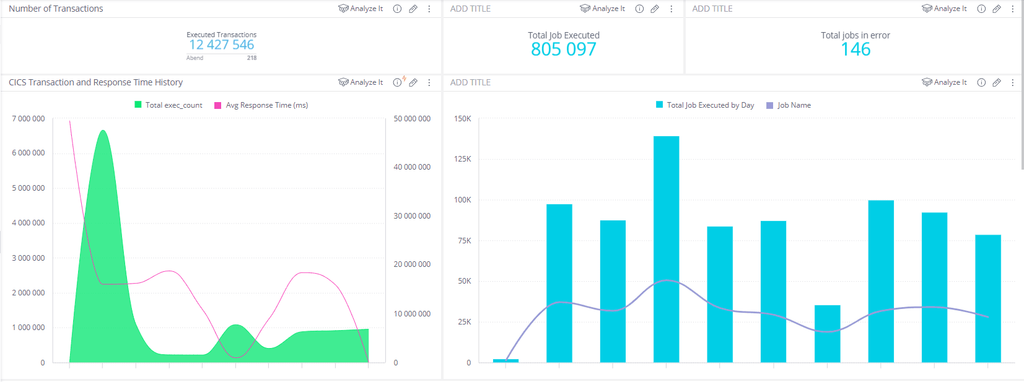
Zetaly is a specialized observability and operational analytics platform, with strong expertise in IBM Z mainframe data. It offers comprehensive solutions for performance monitoring, capacity planning, and expense management. By presenting both real-time and historical data, Zetaly helps increase the efficiency of operations and bring down the costs of managing IT environments.
Pros:
- Mainframe expertise: Zetaly’s long experience on IBM Z mainframes ensures their insights prove deep, actionable and specific to mainframe operations.
- Financial analytics: Zetaly goes beyond IT metrics with features dedicated to handling and improving software licensing costs – an important aspect of mainframe operations.
- Ecosystem integration: Integration with distributed system data provides a unified view of hybrid ecosystems. Zetaly’s API system works both ways: it collects external data to deliver detailed, specific solutions and integrates Zetaly’s data into other analytics platforms.
- Plug-and-Play: Zetaly’s solutions all come with pre-defined, ready-to-use dashboards.
- Cost: Thanks to its subscription-based pricing model, Zetaly’s cost adapts to each need and is more affordable than big players’ solutions. This means that all organizations can benefit from complete observability, even with a limited budget.
Cons:
- Mainframe-first oriented: Zetaly may not be relevant to organizations that do not use mainframe system, as it is their strongest expertise.
- Independent player: The fact that Zetaly does not have global market visibility may scare potential new users, even though existing customers express a high satisfaction rate with Zetaly’s products.
Splunk
Splunk is a well-known observability and security platform that offers extensive logging, monitoring, and analytics capabilities across multiple computing environments, including support for mainframe data integration.
Pros:
- Extensive ecosystem: Splunk has a large ecosystem of apps and integrations that enable comprehensive monitoring across hybrid environments.
- Advanced analytics: Offers powerful analytics and machine learning capabilities, including forecasting and insights across systems.
- Scalability: Highly scalable and capable of handling high volumes of data from both mainframes and distributed systems.
Cons:
- Cost: The pricing model is based on data ingestion rates, and the cost can become prohibitive for large deployments with high data volumes.
- Mainframe data integration: Integrating mainframe data to Splunk requires third-party solutions such as IBM Z Common Data Provider.
- Complexity: Configuring and managing Splunk requires many service packages to answer specific needs, considerably raising the TCO of the solution.
Dynatrace
Dynatrace provides an all-in-one observability platform with advanced AI capabilities. It works with a wide range of technologies, including mainframe data integration, and provides visibility across software stacks in hybrid ecosystems.
Pros:
- AI-powered analysis: Offers root cause analysis and problem resolution using AI, thus cutting down manual work.
- Full-stack observability: Gives insights into applications, infrastructure, and networks, including mainframe and distributed components.
- Ease of use: Focuses on a simple interface and automated discovery of components for simplified monitoring.
Cons:
- Cost: While Dynatrace delivers a thorough solution, the cost can be high, especially for large enterprises.
- Mainframe data: Need the assistance of other solutions to collect mainframe data.
- Mainframe depth: Mainframe-specific insights may not be as deep as those from platforms such as Zetaly, given its wider focus.
Datadog
Datadog is a monitoring and security platform that provides observability across cloud, on-premises, and hybrid environments. Its capabilities include integrating mainframe data and supporting comprehensive oversight across information technology landscapes.
Pros:
- Wide-ranging integrations: Supports a broad array of services and platforms to ensure flexible integration in hybrid ecosystems.
- Real-time analytics: Provides real-time analytics and monitoring for immediate insight into performance issues.
- User experience: Focuses on an easy-to-use interface and simple setup, which improves accessibility for teams.
Cons:
- Cost at Scale: Datadog’s pricing model is based on data volume and the number of hosts, so it can become expensive as usage grows, especially for large organizations with extensive monitoring needs.
- Mainframe integration complexity: Integrating mainframe data can require extra configuration and adaptation, which can complicate setup.
- Depth of mainframe insights: While it offers broad observability, Datadog can fall short on the depth when it comes to mainframe-specific analytics compared to more specialized tools.
When you are choosing an observability tool for hybrid ecosystems involving mainframes and distributed computers, we recommend reviewing factors such as the depth of mainframe integration required, cost implications, scaling requirements, and the skill set of your team. This guide gives a starting point, but a detailed evaluation and possibly a trial period with these tools will help you make the best choice for your specific case.
To learn more about what Zetaly can do for your mainframe, contact us here.